{{ 'fb_in_app_browser_popup.desc' | translate }} {{ 'fb_in_app_browser_popup.copy_link' | translate }}
{{ 'in_app_browser_popup.desc' | translate }}
Create your own adorable rush grass horse bookmark by hand and take it home as a special keepsake!
Please call at least 3 days before your intended experience date to make a reservation.
Reservation phone: +886 37 862123
Not enough stock.
Your item was not added to your cart.
Not enough stock.
Please adjust your quantity.
{{'products.quick_cart.out_of_number_hint'| translate}}
{{'product.preorder_limit.hint'| translate}}
Limit {{ product.max_order_quantity }} per order.
Only {{ quantityOfStock }} item(s) left.
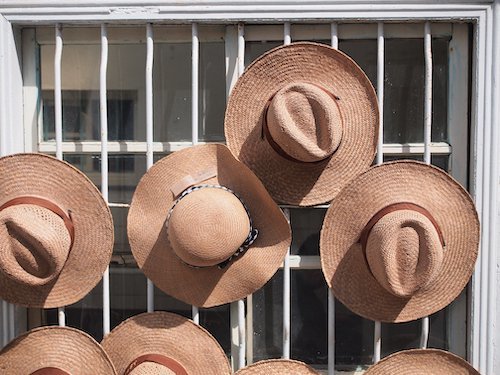
Come to Yuanli Ocean Wind Bookstore and learn about the history and cultural knowledge of the rush grass industry with Yuanli Ocean Wind. Create your own adorable rush grass horse bookmark by hand and take it home as a special keepsake!
Minimum 3 participants per class; maximum 12 participants
For groups of more than 12 people, please contact us at least two weeks in advance for customized “Yuanli guided tours / rush grass experience workshops.”
Please provide your preferred date, time, number of participants, transportation method, and any special itinerary requirements. Pricing will be discussed separately.
Email: 358yuanli@gmail.com
Suitable for Grade 3 and above
NT$150 per person (paid on-site)
Yuanli Ocean Wind Bookstore
No. 32, Aly. 22, Ln. 35, Xinxing Rd., Yuanli Township, Miaoli County, Taiwan
Reservation required. Please book at least 3 days in advance by phone or Facebook message.
Phone: +886 37 862123
Facebook: https://www.facebook.com/taketheseawind
For Yuanli, rush grass is not only a legacy of the past but also an important craft for the future. By integrating rush grass weaving into daily life, we hope to carry its fragrance forward and keep this tradition moving ahead with Yuanli.
In the past, rush grass was a vital local industry in Yuanli, forming a complete production chain—from cultivation and post-harvest processing to weaving and distribution—that supported generations of families.
With the rise of the petrochemical industry, traditional grass weaving was replaced by textiles, leading to a decline in rush grass fields and the gradual loss of craftsmanship as master artisans age.
Through hands-on weaving experiences, we hope more people can understand rush grass and the stories behind it.